Key Image-v05-02

PCCA – Partners in Confronting Collective Atrocities invites you to participate in

Splitting

Image

Seeing the Other in the Self

27–30 August 2026 | Cyprus

PCCA – Partners in Confronting Collective Atrocities invites you to participate in

SPLITTING

IMAGE

Seeing the Other
in the Self

27–30 August 2026 | Cyprus

Key Image-v05-02

Welcome

PCCA – Partners in Confronting Collective Atrocities invites you to participate in Splitting Image: Seeing the Other in the Self.

If you are:

  • Concerned about the growing trends of hatred, racism, and the violence toward difference and diversity
  • Wondering how you — and your communities and institutions — may, consciously or unconsciously, contribute to dynamics of othering and exclusion
  • Curious to explore the psychological and systemic forces that underpin splitting, projection, and the making of the Other


then we invite you to join us in Cyprus for this in-person conference, the culmination of the PCCA Series: “Othering and the hatred of Diversity”.

SPLITTING IMAGE:
Seeing the Other in the Self

Freud invited us to consider the impact of human social structures on the behaviour of individuals. 112 years ago, (in 1914) he wrote “Thoughts for the times on war and death” and he wrote letters on the anatomy of destructiveness in which he said “there are many more cultural hypocrites than truly civilised men [and women]”. As the world continues to play out these cultural hypocriticalities, it takes courage to face the way that we are all mobilised by our cultures to commit atrocities in action or thought. French philosopher, Voltaire wrote in 1765, “Certainement qui est en droit de vous rendre absurde, est en droit de vous rendre injuste” often translated as “Those who can make you believe absurdities can make you commit atrocities.”

In such circumstances, the Other — who represents a different identity and divergent values — readily becomes the signifier of threat. The tendency, at both the individual and group level, is to project fears and hatred outwards, and to identify the Other as the enemy that exists beyond the boundaries of self and group. Unchecked checked splitting will deteriorate into violence and persecution.

The violence is not just manifest in bombs and guns (kinetic war) but in policies, systems of economic, welfare and education practices and least obvious but most virulent, narratives of superiority and inferiority/impure and pure. However, it is illusory to think that such splitting processes provide safety, homogeneity and preserved cultural or racial purity.
 
PCCA launched this series of conferences, 3 online and this in person conference, to explore and address the forces that drive othering and the hatred of diversity — forces that are not abstract, but present and active in the world around us and within us. SPLITTING IMAGE: Seeing the Other in the Self the title is an invitation to those willing to arrest the processes of the automaton, blindly projecting onto the “other” that which cannot be owned from within the self – to find the courage to see the other in the self. Imagine if this could be done in Gaza, Ukraine, Sudan, Iran and on the streets of cities in every country on every continent?
 
These conferences aim to enable participants to encounter and explore their internal stance and lived experience of othering, exclusion and inclusion — as these relate to their identities and experiences of self and others within the conference setting. This is so as to foster deeper understanding of these societal dynamics and reduce the unconscious influence of such internal stances in everyday life.

About the Conference

About the Series

This PCCA series explores the psychological, systemic and societal dynamics of othering and the hatred of diversity through three online experiential conferences and a culminating in-person conference.

Taken as a whole, the series offers an evolving exploration of how responses to the Other are enacted and internalised — within ourselves, our groups, and our societies — and how these broader patterns take shape through particular historical, political, and emotional contexts.

The series began with three online conferences, each exploring a distinct expression of these dynamics:

  • Antisemitism and Otherness — one of the oldest and most persistent forms of collective hatred, and a paradigm for how societies manage — or fail to manage — difference itself
  • The Double-Absence: Despair, Displacement and Hope in Migration — the experience of leaving one world without fully arriving in another, and the projections that migrant bodies carry
  • Islamophobia in an Upside-Down World — fear of Islam and Muslims as a psychic and political defence, and what this reveals about the inner life of societies


Now, in its fourth and final conference, the series turns to the underlying mechanism that connects all three: splitting — the the psychic process by which we locate in the Other what we cannot bear in ourselves, and in ourselves what we cannot bear to see in the Other.

SPLITTING IMAGE: Seeing the Other in the Self invites participants to encounter this dynamic not as an abstract concept but as a lived experience — in the room, in the body, and in the relationships that form and fracture between us.

As with all PCCA conferences, this one begins in the here and now — with whoever is present, and with what emerges between them.

For those who participated in the online conferences, this in-person gathering offers something different: the experience of being physically present with others, in the same room, with all the embodied dimensions that brings — and an opportunity to deepen and extend the learning from the series so far.

For those joining for the first time, the starting point is the same: what happens in the room, as it happens.

The “here and now” experiential model offers a unique way to explore, learn, and generate insight — not through lectures or theory, but through direct engagement with the dynamics unfolding within the group.

Over several days, a temporary learning organisation or community is created. The thoughts, roles, emotions, and interactions that emerge between participants — in real time — become the raw material for reflection, inquiry and understanding.

The assumption is that the conference system functions as a microcosm — a fractal — of the society in which we live. The experiences, interactions, and dynamics that unfold within it — including those between individuals — are not isolated, but embedded in and reflective of the patterns that shape the groups, organisations, institutions, and communities to which we belong.

Being physically present together adds a further dimension to this work. The body is in the room in a way it cannot be online. Proximity, movement, eye contact, the shared experience of space — all become part of the learning material. What happens between people when they are truly together, rather than mediated through a screen, opens possibilities that are different in kind, not only in degree.

This process enables participants to discover how the burdens of the past and the assumptions that govern our behaviour may continue to live within us — and to consider what it might take to move toward a different and more hopeful future.

We believe that individual movement can foster collective movement, and that PCCA’s experiential conferences continue to serve this aim.

The temporary learning community is designed and managed by a team of experienced consultants, who support the learning process, while also being partners in learning.

Participants engage in a variety of structured events — including large groups, small groups, here-and-now events, and review sessions — each offering a different opportunity to reflect, take up roles, and encounter the emotional and systemic dynamics of group and community life around the theme of the conference.

Together, these elements form the framework through which learning becomes possible.

A vital part of the learning process is considering how insights from the conference can be applied in one’s personal, professional, social, and political life.
PCCA has been engaged in this kind of work for many years.

It grew out of the recognition that the legacy of the Holocaust continued to constrain the capacity of a group of German and Israeli psychoanalysts to relate to and work with one another.

In response, the first experiential “Nazareth” Conferences were created — based on the Group Relations model developed at the Tavistock Institute of Human Relations in London, which integrates psychoanalytic and systems approaches.

This model was specially adapted to provide a setting in which ordinarily disowned experiences relating to the Holocaust could be discovered, voiced, and comprehended.

While PCCA’s roots lie in the Holocaust and its transgenerational impact, its work has since expanded to include different groups and other complex societal challenges, traumas and tensions — including the Israeli–Palestinian conflict, the changing identity of Europe, the COVID-19 pandemic, the war in Ukraine, growing threats to democracy around the world, and the human factor in the self-imposed atrocity of climate change.

Through its experiential “learning from experience” conferences, PCCA offers spaces where individuals and groups can reflect on how collective trauma and societal pressures live within and between us — and how acknowledging these forces may open the possibility of transformation, responsibility, and hope.

The 2025-2026 series of conferences has been the next step in this continuing work. Splitting Image: Seeing the Other in the Self is its culmination — and an invitation to take that work further, in person, together.

Participants in PCCA conferences have included psychoanalysts, psychotherapists, consultants, coaches, educators, executives in the private and public sectors, social and environmental scientists, activists, and others. Some come from professional or academic contexts; others are engaged citizens drawn by the opportunity to reflect, inquire, and engage more deeply with the world around and within them.

For those who participated in one or more of the online conferences in this series, this in-person conference offers a particular opportunity — to bring what you have carried from that experience into a shared physical space, and to take the learning further.

This conference is open to anyone interested in exploring the internal and external dynamics that shape how we relate to difference, diversity, othering and exclusion.

You may be concerned about rising racism, polarization, and violence. You may find that recent events have stirred emotional responses or surfaced unfamiliar memories. Or you may simply be curious to understand more deeply how societal processes affect you, your communities, and the organisations and systems in which you are involved.

No previous experience with PCCA or Group Relations is needed — only curiosity, a willingness to learn from lived experience, and an interest in engaging with the dynamics that unfold between self, other, and the wider community, whether in a group, organisation or society.

Staff

Consultant staff will be drawn from the list below.

Staff are collectively responsible for managing the boundaries of the conference
and will take up consultant roles in the different events.

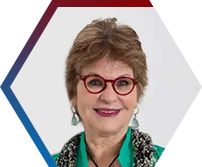
Leslie Brissett JP | PhD, FRSA
Director

Advisory Board Member, Eco-Leadership Institute. Board Secretary to the International Psychoanalytical Association. Group Relations Programme Director (2018-2023), Company Secretary and Principal Consultant Researcher (2013- 2023), Operations Manager (2012-2013) at the Tavistock Institute of Human Relations, London. Director of 7 Leicester Conferences, directed the first Tavistock Conferences in China and the Caribbean. Member of UK Judiciary. Board Member, PCCA.

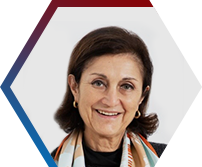
Leila Djemal | MA
Associate Director


Organization Development Consultant and Executive Coach. Founder, past Co-Director and Instructor, TouchOFEK Professional Development Courses. Directed and staffed Group Relations Conferences in Europe, UK and USA. Previously held senior positions in advertising and marketing. Associate, A.K. Rice Institute for the Study of Social Systems, USA. Member, OPUS – an Organisation for Promoting Understanding of Society, London. Past Board Member, OFEK – Association for the Study of Group and Organizational Processes, Israel. Board Member, PCCA.

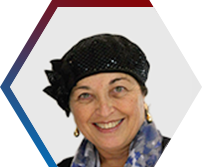
Mira Erlich-Ginor | MA
Associate Director


Training and Supervising Analyst, Israel Psychoanalytic Society. Founding Member and past-Chairperson, OFEK. Initiated and participated in the “Nazareth Project”, working with trans-generational transmission of trauma in Israelis and Germans. Founding Member, PCCA | Co-author of “Fed with Tears, Poisoned with Milk”. Directed conferences on behalf of OFEK in Israel and on behalf of PCCA. Past European Representative, IPA Board. Chair, Steering Committee, IPA in the Community and the World.

Katarzyna Gębala | MA
Administrator

Family and private business advisor and consultant. Prior to that, she was Co-Founder and CEO of an organisation that grew from small to medium-sized, gaining extensive experience in organizational change and development, and the conscious and unconscious processes that affect individuals and the enterprise as a whole. Has participated in Group Relations Conferences as member and staff. She holds a masters degree in educational sciences from the University of Warsaw.

Soulmaz Bashirinia | MSc

Soulmaz Bashirinia is an accredited psychodynamic psychotherapist specialising in individual and couple therapy, integrating systemic and psychoanalytic approaches. With 15+ years in social work and mental health leadership (UK/Sweden), she has pioneered safeguarding innovations, including contextual safeguarding in Hackney. Currently training at Tavistock, she also supervises and lectures at Tavistock Relationships. Her private practice offers therapy in English, Farsi, and Swedish.

Louisa Diana Brunner | PhD

Advanced Practice Lead and Supervisor, Tavistock and Portman Professional Doctorate – D10D | Leadership and Management Consultant | Executive Coach | Member, OFEK, OPUS, ISPSO | Founding Member, PCCA – Partners for Confronting Collective Atrocities | Honorary Member Il Nodo Group | Fellow FFI (Family Firm Institute)

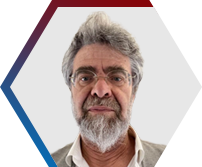
Shmuel Erlich | PhD

Training and Supervising Analyst and former President of the Israel Psychoanalytic Society. | Was Sigmund Freud Professor of Psychoanalysis and Director of the Sigmund Freud Center at The Hebrew University of Jerusalem. | Founding Member of OFEK and PCCA and has directed many of their conferences. | Has published on group and organizational dynamics and authored two books: The Couch in the Marketplace: Psychoanalysis and Social Reality, and Fed with Tears, Poisoned with Milk: The German-Israeli Group Relations Conferences. | Israel

Markus Feil | Dr. biol. Hum.

Dr Markus G. Feil works as an organisational consultant, psychoanalyst, psychotherapist, coach and forensic expert. He has more than 20 years of experience in the forensic field (prison service, forensic hospitals; from high security to outpatient settings) in management and treatment. For more than 10 years he has been consulting organisations and teams in all areas of society using the systems-psychodynamic approach. He is based in Munich (Germany).

Christoph Freytag

Economist, Banker, Impact Investor | Managing Director, Finance in Motion, an impact asset management company. | Lives and works in Frankfurt am Main, Germany. | Over twenty-five years of experience in building and managing financial institutions in Eastern Europe, South-Eastern Europe and Germany. | Treasurer and Management Board Member of PCCA | Germany

Oren Kaplan | PhD 

Professor of Psychology (PhD) | MBA, Economist | Clinical Psychologist, Private clinic | Researcher in trauma and resilience | Chair, Positive Psychology Program; Chair, Environmental, social, and governance (ESG) Management Program, LAHAV, Tel Aviv University | Former President, College of Management, Israel | PCCA Board Member | Israel

Olya Khaleelee | MA

Corporate Psychologist and Organisational Consultant. Chairwoman of OPUS: an Organisation for Promoting Understanding of Society. Professional Partner, The Tavistock Institute of Human Relations, London. First female director of the Leicester Conference. Has published extensively on leadership and system psychodynamics in organisations, and beyond, into society. Co-authored with Halina Brunning: “Danse Macabre and other stories – A psychoanalytic perspective on global dynamics” (2021), “The Covid Trail – Psychodynamic Explorations” (2023), and “Sitting on a Suitcase – Psychoanalytic Stories” (2025).

Lubna Khalid | MA

A consultant living in Toronto. She was born and raised in Pakistan. She moved to Toronto in 2000. She holds a Master’s degree in Physiology from Pakistan. She coordinates women’s leadership and empowerment training programs in a not-for-profit organization. Lubna is an active member and consultant with ICI ( Insight for Community Impact ) offering learning on the nature of difference, leadership, and authority in groups for the past 10 years.

Saleem Khliefi | BA

Social Worker, Group Therapist and Organizational Consultant. Currently works in the Prison Services. Previously worked in the child psychiatric psychotherapy service of Rambam Hospital, Haifa. Former advisor for staff professional development at ELEM – Youth in Distress. Has staffed Group Relations Conferences in Europe and USA. Past Board Member, OFEK – Association for the Study of Group and Organizational Processes, Israel.

Luca Mingarelli

Chairman Foundation Rosa dei Venti. Social entrepreneur, Psychotherapist (ECP, WCP). Director of Therapeutic Community for adolescents, Organizations consultant. Past president of Il NODO Group. OPUS member. Creator and co-director of innovative GR events such as “ECW” and “Learning From Action.” Journalist. Past basketball coach. Ambassador of Michelangelo Pistoletto’s Third Paradise.

Miriam Shapira | MA

Clinical Psychologist, specializing in trauma and grief therapy, community resilience, and the training and supervision of psychologists, therapists, and rabbis. Head of MAHUT Israel – Center for Emergency Preparedness and Resilience. Since October 7th, consulting to communities and regional leadership in Southern Israel around collective trauma and cumulative loss. Founding Member and first Chairperson of BESOD SIACH – Advancement of Dialogue Between Conflict Groups in Israel. Member, OFEK – Association for the Study of Group and Organizational Processes, Israel.

Nadine Tchelebi | PhD

Secretary, PCCA – Partners in Confronting Collective Atrocities | Managing Director, Change: Mediated | Expert for Conflict Prevention and Mediation | Has staffed numerous GRCs including The Leicester Conference (2018). | Board Member, PCCA.

Dorothee von Tippelskirch-Eissing
| Dr. phil., Dipl. Psych. 

Psychoanalyst in private practice, Supervisor and Training Analyst (DPV/IPA) | Incoming president of the German Psychoanalytic Association (DPV / IPA) | Member of the Karl-Abraham-Institute, Berlin Psychoanalytic Institute (BPI), and its former chairperson | Member of the Board of Partners in Confronting Collective Atrocities (PCCA), and its former Chairperson | Germany

PCCA_Logo_white.png

About PCCA

PARTNERS IN CONFRONTING COLLECTIVE ATROCITIES works towards developing strategies to engage with the legacy of past and present atrocities so as to open up possibilities for a more hopeful future.

Its aim is to work through the lingering effects of conflict, collective trauma and societal challenges that lead to destructive escalation, with the goal of fostering better understanding among groups and communities worldwide.

PCCA began by exploring the legacy of the Holocaust and has since expanded to include the Israeli-Palestinian conflict, Europe’s shifting identity, the COVID-19 pandemic, the war in Ukraine, rising threats to democracy, the human factor in the self-imposed atrocity of climate change, and more.

In 2019, PCCA received the Sigourney Award for its work in pioneering community-based psychoanalytic/social interventions to address the residual effects of trauma and atrocities, which was recognized as an outstanding contribution to psychoanalysis and its ability to reduce human suffering and understand human affairs.

Registration

The Venue

The conference will take place at the Pendeli and Petit Palais Hotels in Platres, a historic village in the Troodos mountains of Cyprus, set at 1,200 metres altitude. Known for its cool summers, clean air and natural beauty, Platres has welcomed international visitors for over a century — among them writers, diplomats, and heads of state. Surrounded by pine forest and mountain trails, it offers a setting that is both tranquil and inspiring — a genuine retreat from the pace of everyday life.
Cyprus, with its history of division and unresolved conflict, offers a container where past and present converge. Its location at the crossroads of three continents, and its lived experience of community tensions, creates a unique space for exploring the overt and covert dynamics of group life.

Accessible bedrooms are available. Please contact us to discuss your requirements.

Where and When

The conference is residential and takes place at the Pendeli and Petit Palais Hotels
in Platres, Cyprus.

It will begin on Thursday, 27 August 2026 at 14:00 and end on Sunday, 30 August 2026 at 17:30.

A detailed timetable will be available at the beginning of the conference.

How to Register

To register for the conference, please fill out the online Registration Form.

Last date for registration: 20.08.2026

Note: Early registration is advised as space is limited.

Registration will take effect once payment has been made.

Fees

The conference fee covers participation in all conference events.

For full transparency, accommodation and full board (three meals per day) are priced separately to allow you to choose your preferred room type.

If you participated in one or more of the online conferences in the series you are eligible for a discount as detailed below.

Series Discount

Participated in all three online conferences — €250 discount

Participated in two online conferences — €125 discount

Participated in one online conference — €50 discount

Conference Fees

Conference Fee (excl. accommodation)

Early Bird 1
15 June 2026
€1,500

Early Bird 2
20 July 2026
€1,850

Standard Rate
20 August 2026
€2,200

Series Discount

Participated in 3 online conferences (− €250)

Early Bird 1
15 June 2026
€1,250

Early Bird 2
20 July 2026
€1,600

Standard Rate
20 August 2026
€1,850

Participated in 2 online conferences (− €125)

Early Bird 1
15 June 2026
€1,375

Early Bird 2
20 July 2026
€1,725

Standard Rate
20 August 2026
€2,075

Participated in 1 online conference (− €50)

Early Bird 1
15 June 2026
€1,450

Early Bird 2
20 July 2026
€1,800

Standard Rate
20 August 2026
€2,150

Accommodation

A variety of room types are available across the Pendeli and Petit Palais Hotels to suit different preferences and budgets. Allocation is on a first-come, first-served basis, for each available room type.

A limited number of twin rooms are available for shared occupancy. You are welcome to indicate a preferred roommate on your registration form — if you do not have one in mind, we will match you with another participant who has also chosen shared occupancy.

To register, please complete the Registration Form. If you have already registered and wish to pay online, please select your room type below and make your payment via the link.

The payment amount includes the conference fee and accommodation.
As this is a residential conference, the conference fee and accommodation cannot be booked separately. 

Payments

A variety of room types are available across the Pendeli and Petit Palais Hotels to suit different preferences and budgets.

A limited number of twin rooms are available for shared occupancy. You are welcome to indicate a preferred roommate on your registration form — if you do not have one in mind, we will match you with another participant who has also chosen shared occupancy.

To register, please complete the Registration Form. If you have already registered and wish to pay online, please select your room type below.

Standard Room Shared Occupancy

Conference Fee €1,500 
+
Accommodation €495 

Total:  €1,995

Standard Room Single Occupancy

Conference Fee €1,500 
+
Accommodation €625

Total:  €2,125

Budget Room

Conference Fee €1,500 
+
Accommodation €530

Total: €2,030

Corner Room

Conference Fee €1,500 
+
Accommodation €695

Total: €2,195

Superior Scenic Room

Conference Fee €1,500 
+
Accommodation €745

Total: €2,245

All prices include the conference fee, three nights’ accommodation and full board (three meals per day). 
For those wishing to share a room other than the standard twin, please contact us to discuss options and pricing. 

Bursaries

A reduction of €75 can be requested by students and participants from Eastern Europe and Developing Countries.

A limited number of partial bursaries will be available.

To apply for a bursary, please fill out the Registration Form and send a request with a short description of the relevant background.

Methods of Payment

Payment can be made:

By credit card online

By credit card over the telephone

Cancellation Policy

Notice of cancellation received after Monday, 22 June will incur cancellation charges as detailed below:

Until 21.06.26 – No charge

22.06.26 – 19.07.26 – €200

20.07.26 – 9.08.26 – €550

After 9.08.26 – Conference fees cannot be refunded.

As the program of the conference constitutes an integrated whole and its events are inter-related, participation in all sessions is highly recommended.

Previous participants of PCCA Conferences have said:

Sponsoring Organisations

Supporting Organisations

Supporting Organisations

Contact Us

For further details or if you have any questions
please contact the conference administrator Katarzyna Gębala
conferences@p-cca.org